
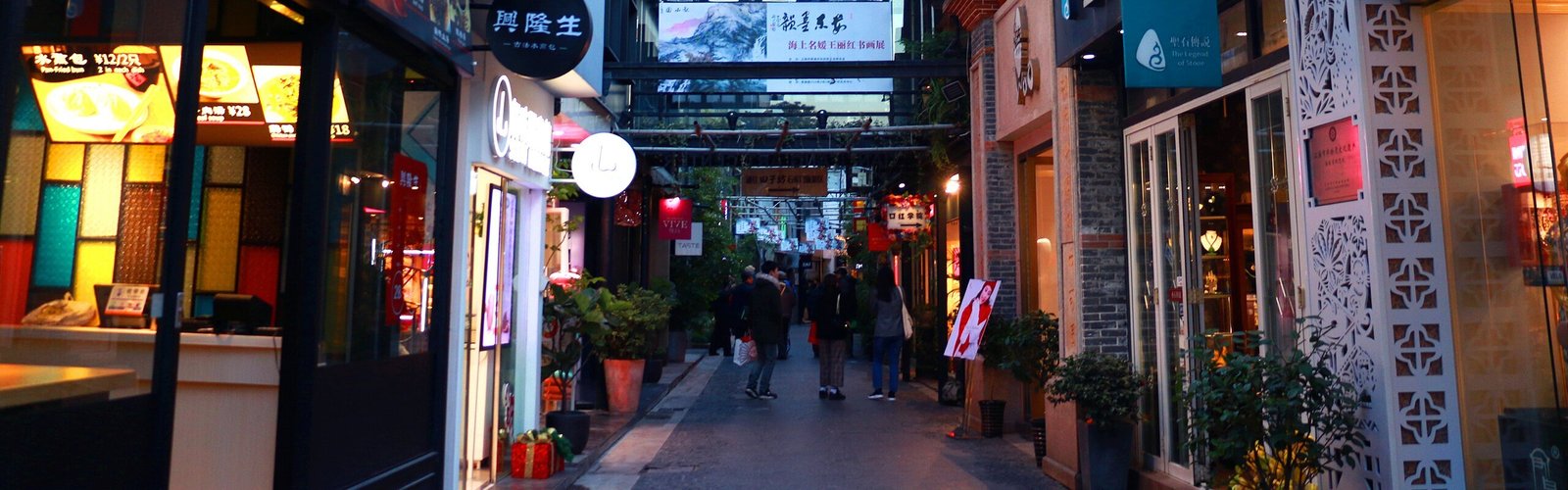

China is not just a place to buy things cheaply. Some purchases are worth making here because the same product or service can be significantly faster, easier, or more accessible than at home. You can have prescription glasses made in a day, order a tailored suit to your measurements, or complete a health checkup within hours.
So the best buys are not simply the things with the lowest price. They are things you already need or want, where buying them in China gives you a clear advantage. In this guide, we focus on those purchases and the places where you can find them.
What Is Worth Buying in China?
1. Glasses: Affordable Prices and Same-Day Service
Many Chinese cities have large optical markets with thousands of frames and lens options. In Shanghai, a pair of prescription glasses usually costs 200–500 RMB (about $30–70), often less than half the price in many Western countries.
After an eye test and choosing your frames, you can usually pick up your glasses within the same day.
2. Technology Products: Lower Prices and More Choices
Chinese technology products are often cheaper than overseas and offer more choices, especially in categories such as DJI drones, Smart wearables, AI glasses, Smart home devices, and other innovative gadgets that may not yet be widely available abroad.
For example, DJI products are usually competitively priced in China, and eligible international visitors can receive a 9% tax refund at qualified stores.
For the widest selection, visit Huaqiangbei in Shenzhen, where you can find everything from everyday electronics to new technology products that are difficult to buy overseas.
3. POP MART: More Designs and Earlier Releases
China has the widest selection of POP MART products, including new collections that often launch earlier than overseas stores.
Chinese flagship stores usually offer more designs and better availability, while prices are also lower than many international stores.
Hangzhou is home to POP MART’s largest store in China, while Beijing and Shanghai also have major flagship stores. In Beijing, you can also visit POP LAND, a POP MART-themed amusement park inside Chaoyang Park.
It is an easy gift choice for children, teenagers, and young adults.
4. Custom-Made Clothing: One-Third of Western Prices
Shanghai's South Bund Fabric Market is a popular place for custom-made clothing.
A custom suit usually costs around 2,000–4,000 RMB (about $280–570), often around one-third of the price of similar tailoring services in Europe or the US.
Depending on the fabric and design, some tailors can complete a suit as quickly as the next day, making it possible even during a short Shanghai trip.
5. Health Checkups: Complete Screenings Within Hours
Health checkups in China are fast and convenient. Many health screening centers can complete a full checkup in around 3–4 hours, and you can usually book an appointment just one day in advance.
If you already need a health checkup during your China trip, let us know when you plan your itinerary. We can help arrange the checkup and fit it into your travel schedule.
Cities Worth Visiting Specifically for Shopping
Shenzhen: Spend Half a Day Exploring Electronics at Huaqiangbei
This is one of the few places in China where you can see such a dense collection of electronics in one area.
Within a few blocks, you can find everything from phone accessories and smart devices to drones, AI glasses, translation devices, and other new technology products.
The biggest reason to visit Huaqiangbei is not only the price, but the access to products that may not be available overseas. Many emerging tech products are launched in China first, and some brands do not have international sales channels yet.
Different markets focus on different products:
- Huaqiang Electronic World: consumer electronics and gadgets
- Yuanwang Digital Mall: phones and digital products
- Longsheng Accessories City: phone accessories and components

Guangzhou: Spend Half a Day on Clothing and Leather Goods
Guangzhou is one of China's biggest manufacturing centers for clothing and leather products, making it one of the best places to shop if you care about price, customization, and variety.
At Baima Clothing Market, you can browse thousands of clothing suppliers and see styles that later appear in retail stores. For leather goods, Guangzhou's leather industry allows visitors to explore everything from finished products to factory samples.
A more unique experience is visiting the city's leather goods markets and factories. Instead of simply buying a bag in a store, you can see how products are designed, produced, and customized.
The advantage of Guangzhou is that you are buying closer to the source. Prices can be much lower than retail stores, and you have access to designs and customization options that are difficult to find elsewhere.
If you have shopping needs in Guangzhou, take a look at our 4-Day Guangzhou-Foshan Business & Industry Tour.
Yiwu: Spend Half a Day for the World's Largest Small Commodity Market
Yiwu is different from other Chinese shopping cities. You do not come here for luxury brands or trendy shopping streets. You come here to experience the scale and variety of China's manufacturing market.
The Yiwu International Trade Market has thousands of shops selling small commodities, including jewelry, accessories, toys, daily goods, sports products, and souvenirs.
The challenge is that the market is huge. With limited time, do not try to see everything. Choose one area based on your interests and explore deeper.
For example:
- District 3: sports products and related goods
- District 5: imported goods and daily necessities
- Binwang Night Market: cheap accessories, fashion items, and small gifts
The biggest attraction of Yiwu is the combination of extremely low prices and endless choices.
How to Save More When Shopping
Tax Refunds
Foreign visitors can enjoy a 9% or 6% tax refund on eligible purchases from participating stores in China.
The easiest way to identify these stores is to look for the “Tax Refund for Overseas Visitors” sign. Stores displaying this sign are eligible for the tax refund program.
If shopping is part of your China trip, these popular tourist shopping areas have a high concentration of tax refund stores:
Beijing: Wangfujing Shopping Area
More than 1,600 tax refund stores are concentrated around Wangfujing, including major shopping malls such as WF Central, Oriental Plaza, and Beijing APM.
Shanghai: Nanjing Road Pedestrian Street
More than 70 tax refund stores are located along Nanjing Road, making it easy to combine shopping with classic Shanghai sightseeing.
Chengdu: Chunxi Road and Taikoo Li Area
More than 200 tax refund stores are concentrated around Chunxi Road, Taikoo Li, and IFS.
After shopping, you can claim your refund either at the airport or port when leaving China, or at a centralized refund point in the city.
Some convenient refund points include:
- Beijing: Wangfujing area
- Shanghai: Shanghai Hotel on Nanjing Road
- Chengdu: IFS and SKP
For travelers visiting multiple cities, some regions also offer cross-city refund services. For example, Chengdu and Chongqing share a tax refund system, meaning you can shop at eligible tax refund stores in Chengdu and complete the refund process later at a participating refund point in Chongqing, such as Chongqing Raffles City.
Bargaining Tips
Bargaining is a national pastime in China so you will find that most retailers, except for department stores and large shopping malls, will be prepared to bargain. Prepare some small change for buying inexpensive stuff. Vendors are usually reluctant to find change for a 100 yuan note.
1. Never (ever!) act like you absolutely must have the item. Salesmen love customers that are excited about a product – it means they can price it much higher. Play it cool – if you see something you really want, keep a straight face and act like you'd rather walk away than pay a fortune, and you'll get a much better price.
2. Start low: Really low. Depending on the market, the starting price could be 7 or 8 times what it should be. Keep this in mind when you throw out your first price. You can always go up from there, but you can't go back down.
3. Shop around: See something you like? Walk around and see if other stands have it. That way, if you can't get the price you want, you can always walk away and try a different stand.
4. Observe other people. If someone else is buying the same thing for a reasonable price, tell the seller you want the same price. Sometimes you can avoid the back-and-forth routine altogether!
5. Be firm, but stay polite.
Don't underestimate the importance of allowing the seller to save face. Sometimes, negotiations do not go the way you planned. Especially in larger clothing markets, sellers may act outraged by a low price, but keep your cool. Often if you say something insulting, or even quote a price that is ridiculously low, the seller may decide not to sell to you at all.
Customer Lynne Buddin's Bargaining Experience:
Haggling is hard work. Guide books say to offer ¼ what was asked, so prices went up; they now start at 10 times what they actually want. This doesn't work for me because if they start at a ridiculous price, I just walk out.
One time we did persevere was for a nice scene of the Li River, an artist's scroll. At 1,680 Yuan/£168, even if Chairman Mao himself had painted it, I wasn't paying that price! Negotiating went on for ages; we ended up paying 4% of the original price.
You can't however haggle in named stores like Nike or Adidas. You will offend the staff, as the price is the price. Also beware, one mistake we made, we thought we had a bargain pair of trainers; the 49 yuan sign was 49% off, not 49 yuan. Not such a bargain as we thought, but it made the sales assistant laugh when she realised.
What to Buy in China’s Most Popular Travel Cities
Different cities in China are known for different types of shopping. Focus on products that match the city you are visiting instead of spending time searching randomly.
| City | Worth buying | Where to shop |
|---|---|---|
| Beijing | Tea, traditional crafts, custom glasses | Wangfujing, Qianmen, Xiushui Street → [Beijing shopping guide] |
| Shanghai | Chinese brands, fashion, beauty products | Nanjing Road, Jing’an, Huaihai Road → [Shanghai shopping guide] |
| Guangzhou | Clothing, leather goods, fashion items | Tianhe, Beijing Road, Baima Market → [Guangzhou shopping guide] |
| Chengdu | Sichuan snacks, panda gifts, Mahjong | Chunxi Road, Taikoo Li, IFS → [Chengdu shopping guide] |
Shopping Is Not Obligatory
Don't feel obligated to shop. Our guides offer shopping opportunities as a courtesy, but if you're not interested, you will not get any pressure at all from us.
Other tour guides and sellers may be quite enthusiastic, thinking this is what you want, so don't be embarrassed to tell them directly and immediately that you don't want to go shopping. You'll often find several attendants trying to help you make a purchase. This doesn't mean you have to buy; it's OK to say no, or just to look around.
Outside tourist spots or on the road, there might be some vendors who follow you and try to sell you something. If you are not interested, just ignore them and keep going.